

Which SUV is better for off-road confidence and everyday comfort, the 2026 Toyota 4Runner or 2026 Ford Bronco around Pewaukee, WI?
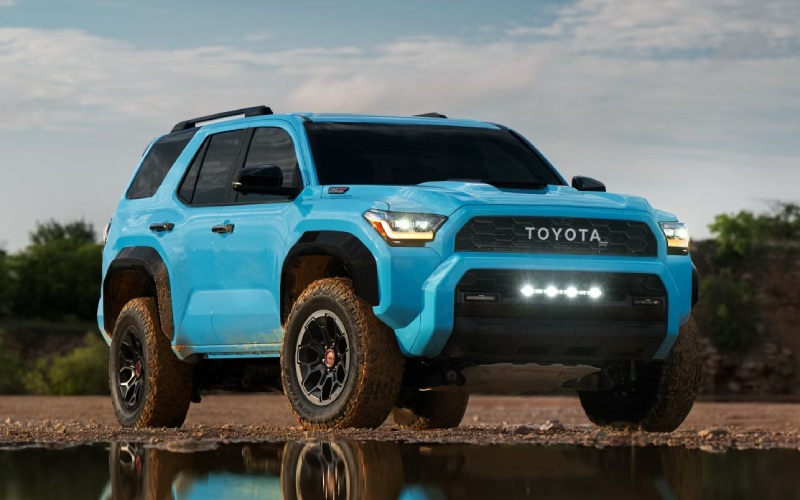
Russ Darrow Toyota – Which SUV is better for off-road confidence and everyday comfort, the 2026 Toyota 4Runner or 2026 Ford Bronco around Pewaukee, WI?
Shoppers often ask a straightforward question: between 4Runner and Bronco, which SUV is the more complete choice for trail confidence and everyday comfort? While both are undeniably capable, the latest 4Runner brings a broader skill set for drivers who split time between rough terrain, highways, and school drop-offs around Pewaukee, WI. It pairs Toyota’s TNGA-F body-on-frame construction with available part-time or full-time 4WD, the Stabilizer Disconnect Mechanism (SDM) for extra articulation, and an available i-FORCE MAX Hybrid powertrain with up to 326 net combined horsepower and 465 lb.-ft. of torque. Then it adds everyday advantages like an available third row, a power rear window, and an available 14-in. Toyota Audio Multimedia touchscreen with wireless Apple CarPlay® and Android Auto™ compatibility.
Bronco counters with impressive hardware: available HOSS suspension systems with FOX dampers, up to seven G.O.A.T. Modes, manual or automatic transmissions, and an Advanced 4×4 setup that can run in an auto mode. Plenty of trims layer in tougher bumpers, skid plates, and aggressive tires. If open-air fun is a priority, removable doors and roof add a unique flavor. But a closer, feature-by-feature comparison reveals where 4Runner stretches ahead for daily life, especially when you value torque-rich drivability, a calmer cabin, and intuitive tech on the dash.
- Capability foundation: 4Runner rides on the TNGA-F chassis with a boxed frame and available SDM; Bronco brings standard 4×4 with HOSS suspension tuning on select models.
- Powertrain choice: 4Runner offers i-FORCE and i-FORCE MAX Hybrid; Bronco offers turbocharged gas engines, including a high-output setup on Raptor.
- Trail visibility: 4Runner’s available Multi-Terrain Monitor shows the terrain beneath and around you; Bronco’s available 360-Degree Camera aids tight maneuvering but lacks an underbody-style view.
- Crew-friendly cabin: 4Runner offers an available third row and available ventilated seats; Bronco seats up to five with heated seat availability on select trims.
- Everyday utility: 4Runner’s signature power rear window and available hands-free power liftgate simplify cargo access; Bronco uses a swing gate and lift glass.
- Trail-to-pavement transitions: 4Runner’s available onboard air compressor helps you air back up after off-roading; Bronco does not offer an integrated factory compressor.
What does this mean for your commute and your weekends? The 4Runner’s available hybrid torque improves drivability in the very scenarios many owners face most often: merging onto the highway, towing a light trailer, or crawling up a rutted climb where smooth, immediate torque prevents wheelspin. The SDM increases suspension articulation when you need it, and the available Multi-Terrain Select and Crawl Control systems help you manage traction and speed over surfaces that change by the foot. The everyday side of the equation is just as compelling, with flexible seating configurations, smart storage, and the power rear window that’s a staple of 4Runner life.
Bronco remains a standout off-roader with plenty of personality. If the thrill of removing doors and roof is a must-have, its design is uniquely appealing. Its trail technologies, especially Trail Control and Trail Turn Assist, add precision and convenience. But if your question is which SUV best balances trail capability with a quieter, more versatile daily routine, the 4Runner’s feature mix simply covers more bases for more households.
For shoppers who like to go deep before test drives, here’s a quick framework to evaluate your needs:
- Define your terrain split: Estimate your percentage of highway, city, gravel, and technical trails to decide whether hybrid torque and full-time 4WD are priorities.
- Count your crew and cargo: Consider if you’ll use an available third row and how often you’ll load gear through the rear window or liftgate.
- List trail must-haves: Decide whether you need SDM-style articulation, underbody viewing, pre-wired AUX switches, or an onboard compressor for your build plan.
- Assess tech comfort: If you prefer bigger screens and simpler interfaces, note the advantages of Toyota’s available 14-in. touchscreen and camera views.
Frequently Asked Questions:
Does the 2026 Toyota 4Runner offer a hybrid powertrain?
Yes. The available i-FORCE MAX Hybrid delivers up to 326 net combined horsepower and 465 lb.-ft. of torque, providing strong low-end response for both city and trail driving.
Can either SUV seat more than five?
4Runner offers available third-row seating for up to seven passengers on select grades. Bronco seats up to five and does not offer a third row.
Which SUV has the larger available center display?
4Runner offers an available 14-in. Toyota Audio Multimedia touchscreen, while Bronco’s largest available display is 12 inches.
What about factory trail aids and visibility?
4Runner’s available Multi-Terrain Monitor shows views around and beneath the vehicle on the touchscreen, while Bronco offers an available 360-Degree Camera and trail technologies like Trail Control and Trail Turn Assist.
Ultimately, if your life blends weekday driveability with authentic off-road ambitions, 4Runner’s hybrid torque, camera tech, and family-friendly packaging give it the edge. When you’re ready to compare trims side by side, Russ Darrow Toyota can walk you through configurations, accessories, and 4WD systems to tailor a build that fits your routes. We’re proudly serving Slinger, Pewaukee, and Menomonee Falls with expertise that keeps your decision simple, clear, and focused on what matters most to you.
0 comment(s) so far on Which SUV is better for off-road confidence and everyday comfort, the 2026 Toyota 4Runner or 2026 Ford Bronco around Pewaukee, WI?