

Which sedan delivers better all-weather confidence for commuters around Slinger, WI?
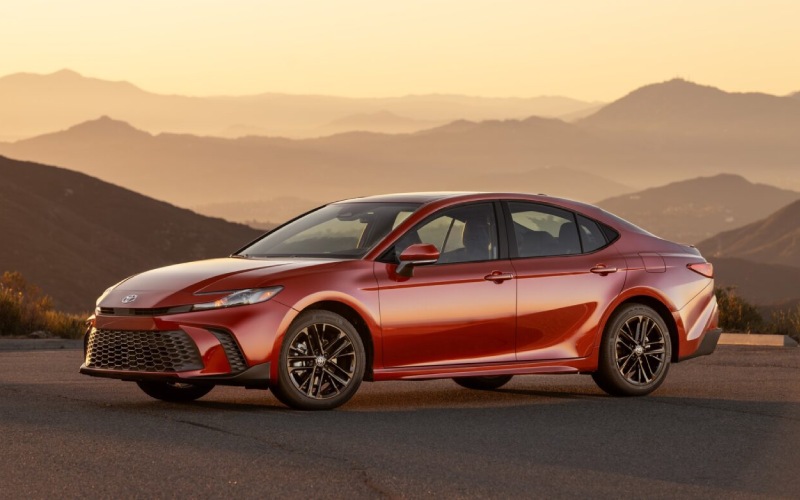
Russ Darrow Toyota – Which sedan delivers better all-weather confidence for commuters around Slinger, WI?
All-wheel traction is one of the most common questions shoppers ask when comparing the newest midsize sedans. If you are weighing the 2026 Camry Hybrid with available Electronic On-Demand AWD against the 2026 Sonata with available HTRAC AWD on select gas trims, you are likely asking the right question: which approach delivers the confidence you want when roads get slick, rutted, or simply unpredictable around Slinger, WI? Let’s unpack how each system works and why the underlying powertrain matters as much as the badge on the trunk.
Toyota’s available Electronic On-Demand AWD pairs seamlessly with the Camry’s all-hybrid architecture. Instead of a bulky driveshaft sending power rearward, the system can intelligently route torque to a rear electric motor when the front wheels begin to slip. The practical takeaway is immediate, near-instant help from the rear axle that feels natural—no thumps or lag as the car decides what to do. Because the Camry lineup is entirely hybrid, this refined, always-on character is consistent from LE to XSE. By contrast, Hyundai takes a split approach. Sonata makes HTRAC AWD available only on certain gas trims, while the Sonata Hybrid prioritizes efficiency in front-wheel-drive form. That means your AWD choice is tied to a specific powertrain, not something you can add to the hybrid. If you want hybrid smoothness and AWD together, Camry stands alone here.
On winter mornings or during shoulder-season downpours, what you feel first isn’t a spec or a marketing name—it is the way the car gathers itself and moves forward with confidence. Camry’s hybrid torque is immediate and calm, which helps you roll out of a side street onto a salted but damp main road without drama. Add the available 4-Mode Drive Switch and you can keep it in Normal for a balanced response or tap Sport for a sharper pedal feel when you are merging through uneven lanes. Sonata’s HTRAC AWD on gas models is capable and well-tuned for the class, but if you prefer the quiet, composed character of a hybrid powertrain during these same moments, it is not paired with AWD in the Sonata lineup. For many commuters, that is the deciding factor.
Let’s talk visibility and driver assistance. Camry’s available Head-Up Display helps keep your speed, turn-by-turn directions, and key alerts in sightline on gray, low-contrast days. Toyota Safety Sense™ 3.0 stacks in features including a standard Blind Spot Monitor and available Traffic Jam Assist when properly equipped, supporting you in stop-and-go snarls where low-speed finesse matters. Sonata counters with Hyundai SmartSense, including Lane Keeping Assist and Smart Cruise Control with Stop & Go. It is a solid suite, and on higher trims you can add Surround View Monitor and other aids. The difference is philosophical: Camry’s safety and traction systems feel like one team playing the same game as the hybrid powertrain—smooth, predictable, and quietly capable in the background.
Drivers often ask whether these technologies make a meaningful difference in everyday life or if they are only for worst-case weather. The short answer is yes, they matter daily. Traction management isn’t just about whiteouts—it is about painted crosswalks after a light rain, sandy shoulders at rural left turns, and that bumpy, shaded corner on your neighborhood loop that never dries as fast as the rest of the road. Hybrid torque delivery plus an on-demand rear axle can take the edge off those moments. And because Camry’s system is integral to the platform, its responses are consistently dialed-in regardless of trim.
How about the feel from behind the wheel? Camry’s hybrid system is tuned for linear, rising torque and a calm soundtrack, so AWD engagement is almost transparent. You sense more grip, not more noise. Sonata’s HTRAC, when equipped on gas models, provides a confident launch and stable tracking in the rain, but pairing it to the non-hybrid engine introduces a difference in character from the Sonata Hybrid’s quieter demeanor. If you test-drive them back-to-back, pay attention to how each car smooths out low-speed traction changes and how settled the cabin feels during short bursts of acceleration across wet intersections.
For commuters who split time between surface streets and freeway ramps, technology and traction aren’t the entire story—infotainment and ergonomics help you stay dialed-in without distraction. Camry’s available 12.3-in. Digital Gauge Cluster and the available JBL® Premium Audio system make it easy to keep tabs on the drive while keeping calls and navigation clear. Sonata’s available 12.3-in. display and Bose audio deliver a premium experience as well. As you evaluate AWD capability, consider how the interface supports you when visibility drops and voice commands or steering-wheel controls become your go-to inputs. Clear displays, quick responses, and logical menus reduce cognitive load when the road surface is asking for your attention.
Still deciding? Here is a simple framework you can take to your test drives:
- Drive each car on the same route: include a tight turn, a bumpy patch, and a quick merge.
- Test low-speed traction: start from a painted crosswalk after a light sprinkle and feel for smooth, decisive movement.
- Evaluate visibility tech: check how well the cluster and any available Head-Up Display help you keep eyes forward.
- Listen for calm: notice cabin noise and drivetrain smoothness when traction is shifting.
If all-weather assurance and hybrid smoothness are both priorities, the Camry’s available Electronic On-Demand AWD with its all-hybrid lineup is a compelling answer. If you prefer a gas engine with AWD and a separate, efficient hybrid option, the Sonata’s split lineup offers that path—just know you are choosing between two distinct experiences.
At the end of the day, confidence comes from how consistently a car reacts to the road in front of you. The Camry’s integrated approach—hybrid torque, available on-demand rear-axle help, and a suite of driver aids designed to complement that foundation—keeps your commute steady and your focus forward. For shoppers who want their sedan to be ready every day, not just on ideal ones, that combination is hard to beat.
Russ Darrow Toyota is here to help you compare both cars’ traction, tech, and feel in a single visit so you can choose with clarity.
serving Slinger, Pewaukee, and Menomonee Falls
Frequently Asked Questions:
Does the Camry Hybrid offer AWD?
Yes. Camry offers available Electronic On-Demand All-Wheel Drive that can send torque to the rear wheels when the system detects slip, complementing its hybrid torque delivery.
Can I get AWD on a Sonata Hybrid?
AWD is offered on select gas Sonata trims with HTRAC; the Sonata Hybrid is front-wheel drive based on current published features.
What should I feel from a good AWD system on wet roads?
Look for smooth, decisive launches with minimal wheelspin, stable tracking through shallow standing water, and transparent intervention—more grip without extra noise or harshness.
Which driver assistance features help in traffic?
Camry offers available Traffic Jam Assist and a standard Blind Spot Monitor, while Sonata includes features like Smart Cruise Control with Stop & Go and Lane Keeping Assist on all trims.
0 comment(s) so far on Which sedan delivers better all-weather confidence for commuters around Slinger, WI?