

Which 4WD system on the 2026 Toyota 4Runner is best around Muskego, WI?
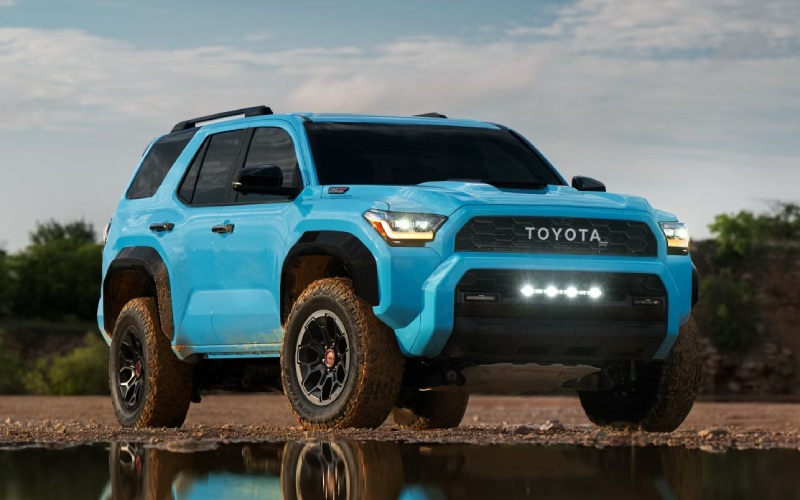
Russ Darrow Toyota – Which 4WD system on the 2026 Toyota 4Runner is best around Muskego, WI?
Choosing the right drivetrain for your 2026 Toyota 4Runner is a real-world decision that touches every drive you take—whether you’re cruising Janesville Road on a weekday, backing down a boat launch on Little Muskego Lake, or heading out toward the Kettle Moraine Scenic Drive. At Russ Darrow West Bend Toyota, we guide shoppers through the most practical question we hear in the showroom: Which 4WD system fits your life around Muskego, WI—2WD, Part-Time 4WD, or Full-Time 4WD? Here’s a clear, local-minded breakdown to help you feel confident before your test drive.
What the 2026 4Runner offers under the skin
The 2026 4Runner is built on Toyota’s TNGA-F chassis, a rugged body-on-frame foundation that’s engineered for toughness, enhanced rigidity, and increased rust protection. Powertrains include the responsive i-FORCE engine with 278 horsepower and 317 lb.-ft. of torque, and the i-FORCE MAX Hybrid that delivers up to 326 net combined horsepower and 465 lb.-ft. of torque. Across the lineup, you can choose from available 2WD, Part-Time 4WD, or Full-Time 4WD—three distinct approaches to traction management that influence daily drivability, efficiency, and off-road confidence.
Before we match drivetrains to local driving, it helps to know how each one behaves. In simple terms: 2WD prioritizes efficiency and simplicity, Part-Time 4WD gives you driver-selectable traction when you want it, and Full-Time 4WD provides always-on balance with a center differential designed for mixed conditions.
How each drivetrain fits everyday Muskego driving
For many Muskego-area drivers, daily life blends neighborhood streets near Denoon Park, stop-and-go along Moorland Road, and weekend runs into Milwaukee. If you value a smooth, predictable commute with occasional adventures, think about how you’ll use the 4Runner most of the time and where you’ll appreciate traction support.
2WD shines in consistent pavement driving. It’s straightforward, helps you get the most from the 4Runner’s estimated up to 23 combined MPG, and pairs well if your routine is school drop-offs, errands on Janesville Road, and highway miles on I-43. If “occasional adventure” for you means well-maintained gravel or a campsite with good access, 2WD can be a practical, low-complexity choice.
Part-Time 4WD is the classic capability play. You drive in 2WD most of the time, then engage 4WD when surfaces get loose or traction becomes a concern—think rolling a trailer up a damp grass shoulder near a lakeside driveway, navigating rutted two-tracks out toward Vernon Marsh Wildlife Area, or easing down a slick public boat ramp. Because Part-Time 4WD locks the front and rear axles together when engaged, it’s intended for low-traction surfaces—not tight, dry pavement where driveline binding can occur.
Full-Time 4WD is about set-it-and-forget-it composure. A center differential helps the system adapt to changing surfaces, so you don’t have to think about mode selection each time the road transitions from dry pavement to gravel or a wet, leafy bend along College Avenue. For Muskego drivers who want reassuring traction without toggling between modes, Full-Time 4WD is our go-to recommendation.
Weekend plans, boat launches, and back-road confidence
If your 4Runner will see regular launches at Little Muskego Lake or Big Muskego Lake, Part-Time 4WD and Full-Time 4WD both offer meaningful advantages when you’re backing down a ramp or pulling out on algae-slick concrete. Factor in the 4Runner’s generous ground clearance—up to 10.1 inches—and you get helpful approach performance at angled access points and rustic trailheads.
Looking beyond pavement, 4Runner models like TRD Off-Road add hardware that matters on uneven terrain near the Kettle Moraine State Forest. Available Multi-Terrain Select (MTS) with Crawl Control (CRAWL) helps manage wheelspin and low-speed traction, while the available Stabilizer Disconnect Mechanism (SDM) can increase suspension articulation to keep tires planted over washboards and rocks. If you regularly explore unpaved fire lanes or seasonal access roads, pairing these systems with Part-Time 4WD or Full-Time 4WD elevates confidence and comfort.
Powertrain pairing: i-FORCE or i-FORCE MAX Hybrid?
Both powertrains complement the 4Runner’s drivetrains well, but they feel different in everyday use. The i-FORCE MAX Hybrid’s up to 465 lb.-ft. of torque arrives quickly, making merges from Moorland Road to I-43 feel effortless and controlled, especially with passengers and gear. The hybrid’s strong low-end torque also pairs naturally with traction-focused driving, whether you’re easing a trailer up a gravel incline or crawling through a rutted access lane. If you anticipate frequent load-hauling or trail exploration, the i-FORCE MAX Hybrid is a compelling match with either Part-Time or Full-Time 4WD.
The standard i-FORCE engine is no slouch—278 horsepower and 317 lb.-ft. of torque provide confident response for commutes and weekend runs. It’s a great fit if you favor a simpler setup, spend most of your miles on pavement, and still want the option to head off the beaten path when plans call for it.
Tech and utility that make ownership easier around Muskego
Beyond traction, day-to-day usability makes the 4Runner feel tailored to life here. The available Multi-Terrain Monitor (MTM) can display selectable front, side, or rear views on an available 14-in. Toyota Audio Multimedia touchscreen, so you can watch for submerged ramp edges or hidden curbs while parking a trailer near a lakeside lot. The available Tow Technology Package builds in helpful aids when you do hitch up for a haul across town.
Utility touches add up quickly. The signature Power Rear Window makes it easy to pass a paddleboard or fishing rods through the back without opening the liftgate. Available tumble fold rear seats and up to 90.2 cu. ft. of cargo space let you reconfigure for coolers, camp chairs, or a weekend of overlanding gear. For those who air down on trails, an available onboard air compressor in the cargo area lets you bring tires back to proper PSI before heading home.
Inside, available SofTex-trimmed or leather-trimmed heated and ventilated seats deliver all-season comfort, while Toyota Safety Sense™ 3.0 adds intelligent driver assistance. And with wireless Apple CarPlay® and Android Auto™ compatibility available on the Toyota Audio Multimedia system, your routes, playlists, and calls stay seamless between Muskego, West Allis, and wherever your schedule leads.
Ready to match drivetrains to your routine? Use this quick decision guide, then plan a back-to-back drive with us.
- Choose 2WD if: You primarily drive paved routes around Muskego and Southeast Wisconsin; you want straightforward ownership with the highest focus on efficiency; your off-pavement plans are limited to well-graded gravel or maintained campsites.
- Choose Part-Time 4WD if: You want driver-controlled traction for boat launches, rustic driveways, and seasonal access roads; you enjoy hands-on control and plan occasional trail time; you appreciate the classic durability of a selectable 4WD system for low-traction conditions.
- Choose Full-Time 4WD if: You prefer always-on stability without switching modes as surfaces change; your routine blends pavement with frequent gravel, wet leaves, or uneven country roads; you want balanced traction for year-round confidence and smooth daily drivability.
Not sure which one feels right? We recommend scheduling two short routes from our dealership: a mixed-surface loop that includes suburban streets, a quick highway merge, and a stretch of imperfect pavement; and an optional stop at a sloped parking area to simulate ramp-like traction demands. Feeling the difference between Part-Time and Full-Time 4WD—especially the smoothness of Full-Time 4WD on mixed surfaces—often makes the choice clear.
Frequently Asked Questions:
Does Full-Time 4WD affect everyday drivability on dry pavement?
Full-Time 4WD in the 2026 4Runner is designed for mixed conditions and daily use, thanks to a center differential that balances power front-to-rear. You get consistent traction without having to think about engaging or disengaging 4WD, which many drivers appreciate on varied routes around Muskego.
When should I use Part-Time 4WD on the 2026 4Runner?
Part-Time 4WD is intended for low-traction surfaces. Use it when conditions are loose or slick, such as gravel, mud, or wet grass, or when you need extra grip on uneven terrain—situations you might encounter at boat launches, unpaved lots, or rustic trailheads near Waukesha County. For precise operation and speed recommendations, always consult your Owner’s Manual.
Which trims pair best with trail use near Kettle Moraine?
TRD Off-Road and TRD Off-Road Premium add capability-focused hardware like Bilstein® monotube shocks with remote reservoirs, 18-in. alloy wheels with 33-in. all-terrain tires, and Multi-Terrain Select (MTS) with Crawl Control (CRAWL). TRD Pro and Trailhunter take it further with components like FOX® 2.5-in. Internal Bypass QS3 shocks or Old Man Emu forged shocks and additional off-grid equipment.
Can I still get three rows if I choose a traction-focused setup?
4Runner offers seating for up to seven with available third-row seating on select grades. If you need the extra seats and want enhanced traction, our team can help you build or locate a configuration that balances both needs.
How does the i-FORCE MAX Hybrid change the feel of 4WD?
The i-FORCE MAX Hybrid’s strong low-end torque complements traction-focused driving, helping you ease trailers, climb uneven surfaces, and merge confidently. Many shoppers appreciate the hybrid’s responsive feel in stop-and-go traffic and on short on-ramps around Muskego while still appreciating 4Runner’s available 4WD options.
Our team at Russ Darrow West Bend Toyota is here to help you experience these differences firsthand. We’ll tailor a test route that mirrors how you actually drive—from school pickups to lakeside weekends—so you can decide whether 2WD, Part-Time 4WD, or Full-Time 4WD best matches your life around Muskego, WI.
Have a specific driveway, ramp, or trail in mind? Bring it up when you schedule your drive, and we’ll suggest a comparable evaluation route. When you’re ready, explore 2026 4Runner grades—SR5, TRD Sport, TRD Off-Road, Limited, TRD Pro, Trailhunter, and more—with available features like the 14-in. Toyota Audio Multimedia touchscreen with wireless Apple CarPlay® and Android Auto™ compatibility, Toyota Safety Sense™ 3.0, the signature Power Rear Window, and the available onboard air compressor. We’ll help you dial in the configuration that feels right the first time—and still feels right after months of ownership.
Plan your visit to Russ Darrow West Bend Toyota, just a straightforward drive from Muskego, and let our product specialists put you behind the wheel of a 2026 Toyota 4Runner that’s built for your roads, your ramps, and your weekends.
0 comment(s) so far on Which 4WD system on the 2026 Toyota 4Runner is best around Muskego, WI?