

Is the 2026 Toyota Tundra or the 2026 Ford F-150 better for towing around Slinger, WI?
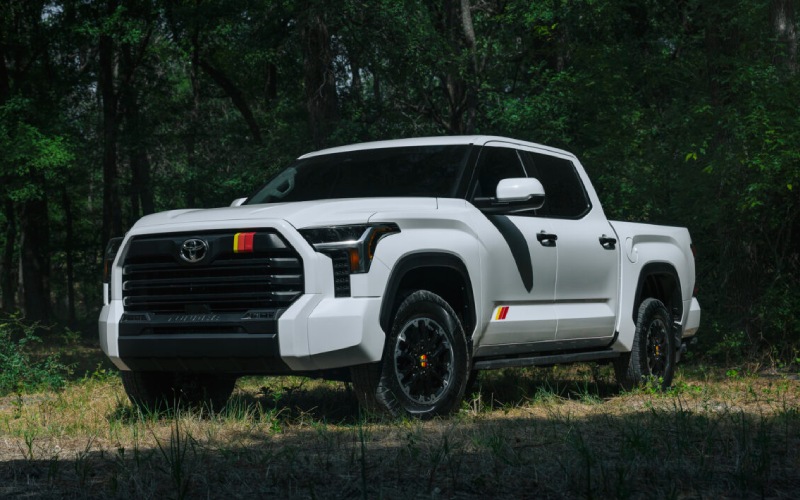
Russ Darrow Toyota – Is the 2026 Toyota Tundra or the 2026 Ford F-150 better for towing around Slinger, WI?
When drivers ask which truck tows better, the answer depends on how, where, and how often you tow. The 2026 Toyota Tundra and the 2026 Ford F-150® both bring serious credentials. The F-150® touts a max available 13,500-lb tow rating when perfectly configured, while the Tundra delivers up to 12,000 lbs with its proven i-FORCE and i-FORCE MAX powertrains. Ratings are a starting point; real-world confidence comes from chassis design, torque delivery, and tow-focused tech. That is where Tundra shines: the multi-link rear suspension with coil springs provides a calmer, more planted tow compared with traditional rear leaf springs, and the i-FORCE MAX hybrid’s 583 lb.-ft. of torque feels unflappable when merging, passing, or climbing.
A second difference you will feel immediately is tech that reduces workload. Tundra’s available Trailer Backup Guide with Straight Path Assist uses cameras and sensors to help you reverse with accuracy, while the integrated Trailer Brake Controller (ITBC) and available Panoramic View Monitor combine to simplify everything from hitching to navigating tight campgrounds. Ford counters with Pro Trailer Backup Assist and available camera coverage of its own, and those tools are legitimately helpful. Still, Tundra’s in-cabin interface—anchored by an available 14-in. multimedia touchscreen and available 12.3-in. digital gauge cluster—presents tow data and guidance in larger, clearer tiles. On the edge of Kettle Moraine or near Slinger, WI trailheads, that clarity matters when you are juggling spotters, grade changes, and a full family schedule.
Power delivery is just as important as peak ratings. The Tundra’s two twin-turbo V6 choices serve different needs: the i-FORCE for strong, dependable pull and the i-FORCE MAX hybrid for maximum torque with swift low-end response. That instant electric assistance in the hybrid settles the truck-trailer combination early in a launch and reduces the need for aggressive throttle. Ford’s 3.5L EcoBoost® V6 and PowerBoost® Hybrid are stout, too. But on uneven county roads and rolling two-lanes, Tundra’s balance of smooth tip-in, steady midrange, and calm downshifts feels especially composed with a mid-weight trailer—precisely the comfort many families want on weekend getaways.
Chassis and braking poise round out the picture. Tundra’s ride control benefits from its coil-spring rear architecture, which keeps the truck settled over expansion joints and patchy pavement that can unsettle leaf-spring setups. That means fewer steering corrections and less fatigue over long stretches. The added stability pairs well with available tow modes, downhill assist logic, and clear instrumentation so you can keep speed, temperature, and trailer status top-of-mind without scanning multiple submenus. When you are backing down a sloped driveway or staging at a busy boat launch, the sense of calm is tangible.
Technology and safety also influence tow-day confidence before you even put the trailer on the ball. Tundra equips Toyota Safety Sense™ 2.5 as standard, including Dynamic Radar Cruise Control and Lane Departure Alert with Steering Assist. When you are tracking long interstate hours toward Door County or the Driftless Area, these features help you stay fresh and alert. F-150® offers Ford Co-Pilot360® tech and available BlueCruise for hands-free highway driving in compatible zones. Both approaches aim to ease the load, but Tundra’s consistent standardization means you start with a robust safety baseline across the lineup.
Bed construction and durability matter, too. Tundra’s standard aluminum-reinforced composite bed resists dents, dings, and rust that can show up quickly when loading hitch gear, coolers, or camping bins. Ford’s bed is aluminum, light and strong, but more susceptible to cosmetic wear. Over years of family trips and project weekends, that difference adds up—especially if you skip a bedliner to save weight or keep cargo sliding smoothly.
If you are deciding which truck to choose for towing around Slinger, WI, consider your trailer type, payload, and where you drive most. If you regularly run near max tow ratings and prioritize peak numbers, an F-150® built for that mission is compelling. If you value settled handling with a trailer, consistent tech integration, and a bed that takes hard use in stride, Tundra provides a high-confidence answer. One more note for local life: winter traction around the glacial hills west of town rewards trucks that communicate grip clearly through the chassis. Tundra’s multi-link rear suspension helps here, too, translating traction more evenly, which you notice when pulling out from plowed driveways or cresting frosty side streets with a small trailer in tow.
To help you think through the decision, here is a quick, practical checklist you can use before test drives.
- Your trailer profile: What is the loaded weight, tongue weight, and typical cargo add-ons like generators, kayaks, or bikes?
- Your routes: Do you tow mostly on interstates, two-lanes with rolling grades, or tight neighborhood streets with tricky parking angles?
- Your tech preferences: Which driver displays and towing aids help you most—larger touch tiles, specific camera views, or lane guidance?
- Your durability needs: How often do you load gear that can scuff or dent a bed, and do you want a liner or a composite bed from the start?
Frequently Asked Questions:
Does the 2026 Toyota Tundra have enough capacity for a family camper?
Yes. Properly equipped, Tundra tows up to 12,000 lbs. Many family travel trailers fall well below that, leaving margin for passengers, cargo, and hills. Pair the i-FORCE MAX hybrid with the integrated trailer brake controller for especially calm, controlled pulls.
What towing tech helps most for tight campground maneuvers?
Tundra’s available Panoramic View Monitor and Trailer Backup Guide with Straight Path Assist provide clear camera angles and steering guidance for precise reversing. Ford’s Pro Trailer Backup Assist is also helpful; try both interfaces during a test drive to see which you prefer.
Which rides smoother with a trailer attached?
Many drivers perceive Tundra’s coil-spring rear suspension as smoother and more settled with a mid-weight trailer, especially on patchy pavement or wavy asphalt. A back-to-back drive over the same route is the best way to feel the difference.
How do the hybrid options compare for towing?
Tundra’s i-FORCE MAX hybrid focuses on big torque and immediate response, which is great for highway merges and short, steep grades. Ford’s PowerBoost® Hybrid also delivers strong output. Your preference may come down to how each truck modulates throttle and shifts under load.
For shoppers who want a clear, confident path to the right setup, Russ Darrow Toyota can help you match towing goals with the ideal build—engine, axle ratios, towing aids, and bed length—so you get on the road with fewer compromises. We are proudly serving Slinger, Pewaukee, and Menomonee Falls with guidance rooted in local driving needs and the routes you travel most.
0 comment(s) so far on Is the 2026 Toyota Tundra or the 2026 Ford F-150 better for towing around Slinger, WI?