

How the Stabilizer Disconnect Mechanism on the 2026 Toyota Tacoma Builds Trail Confidence Around West Bend, WI
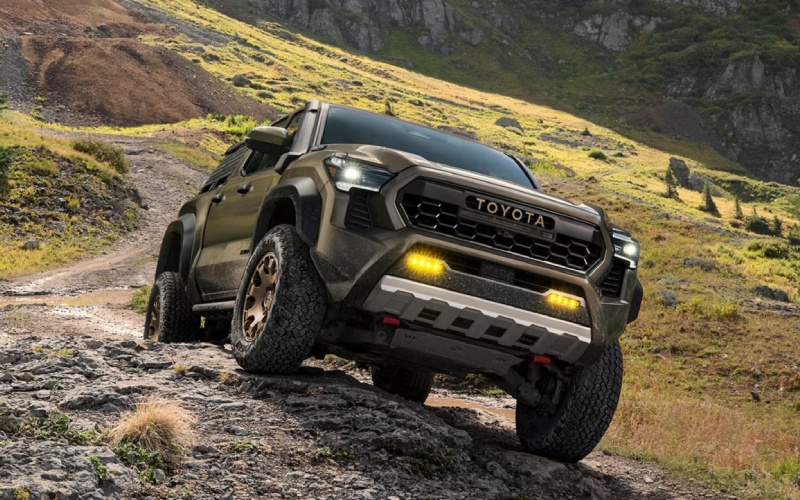
Russ Darrow Toyota – How the Stabilizer Disconnect Mechanism on the 2026 Toyota Tacoma Builds Trail Confidence Around West Bend, WI
The 2026 Toyota Tacoma is built for drivers who want a confident, well-balanced truck on pavement and a smartly engineered machine when the ground turns steep, rutted, or rocky. One of the standout capabilities supporting that mission is the Stabilizer Disconnect Mechanism (SDM). It’s an off-road feature designed to increase wheel articulation by disconnecting the front stabilizer bar at the push of a button, helping the tires stay in better contact with uneven terrain. Around West Bend, WI—where glacial landscapes and rolling hills lead to trailheads throughout Kettle Moraine—the benefit is immediate: more traction, less drama, and improved control when the trail presents offset bumps, washouts, or shelf-like ledges.
SDM is even more compelling because it works in concert with the Tacoma’s broader chassis and traction suite. The multi-link rear suspension helps the truck stay composed; available Crawl Control (CRAWL) adds low-speed throttle and brake management on loose surfaces; and the available 3D Multi-Terrain Monitor (MTM) goes a step further by letting you view front, rear, and side angles—plus the ground below—directly on the available 14-in. touchscreen. Add in select grades with FOX® shocks or Old Man Emu® 2.5-in. forged monotube position-sensitive shocks, and you have a setup that can absorb repeated hits while maintaining stability, steering precision, and confidence through the obstacles common to Wisconsin’s forested backroads.
What SDM Does—and Why It Matters on Real Trails
When connected, a stabilizer bar helps reduce body roll during cornering on paved roads. Off-road, the same bar can limit wheel articulation over uneven surfaces. That’s where the Tacoma’s Stabilizer Disconnect Mechanism earns its keep. With SDM engaged, the bar disconnects to allow additional independent movement of the front wheels. On ruts and rock gardens, you’ll feel the difference—your front axle can more easily step up and down over opposing bumps, keeping more of your tire tread on the earth. More contact generally equals more traction, and more traction equals greater composure and control, which translates into fewer wheel spins and less momentum needed to clear the same obstacle.
What makes SDM especially practical around Washington County is the mix of driving that so many Tacoma owners do. You might commute along Highway 33 during the week, then hit a two-track access road near the Kettle Moraine Scenic Drive on the weekend. SDM supports both worlds. Keep it connected for stable on-road manners—Tacoma is composed and confident with or without SDM activated—and then disconnect for slow, technical segments when the trail demands articulation. If you explore gravel spurs near the Pike Lake Unit or head toward the Sunburst area beyond winter, SDM gives you a bigger “traction toolkit” without requiring aftermarket suspension work.
How SDM Teams Up With Crawl Control and MTM
Traction is a multi-system story, and Tacoma’s electronics help you use SDM to its fullest. Available Crawl Control (CRAWL) is purpose-built for slow-speed ascents and descents, automatically modulating throttle and brakes while you focus on steering. It’s a useful companion to SDM when you’re navigating rooty climbs or loose, rock-strewn passes because it minimizes wheelspin spikes and reduces the need for momentum—momentum that can cause banging and bouncing. Meanwhile, the available 3D Multi-Terrain Monitor (MTM) offers clarity in tight quarters, displaying the space ahead and around the truck on the large 14-in. Audio Multimedia screen. Together, SDM, CRAWL, and MTM give you three forms of confidence: mechanical articulation, traction management, and enhanced visibility.
Want to fine-tune your comfort while tackling uneven ground? On TRD Pro, IsoDynamic Performance front seats with an integrated damping system help your body absorb repeated hits more gently, so you can stay sharper and less fatigued as you pick lines through choppy surfaces. Pair those seats with the available 12.3-in. digital gauge cluster to keep tabs on off-road systems, and Tacoma becomes as informative as it is capable.
Power, Control, and the Right Gear for West Bend-Area Adventures
When technical trails meet steep grades, the available i-FORCE MAX hybrid powertrain shines with up to 326 horsepower and 465 lb.-ft. of torque. That low-end muscle helps you ease up steps with less throttle and makes controlled crawling simpler, especially when SDM is engaged and the suspension is flexing to keep the truck planted. If you prefer the engagement of rowing your own gears, select Tacoma grades offer a 6-speed manual transmission—an increasingly rare treat that gives enthusiasts another layer of control on the trail.
For everyday life, Tacoma’s technology stack rounds out the experience. The available 14-in. Audio Multimedia touchscreen supports wireless Apple CarPlay® and satellite navigation, while the available 12.3-in. digital gauge cluster places key drive and off-road data in your line of sight. When you want to keep a close eye on a trailer heading to a boat launch, Tacoma offers advanced towing tech like Trailer Backup Guide with Straight Path Assist and an integrated brake controller. And with Toyota Safety Sense 3.0 watching your daily routes, you’ll appreciate how well the truck transitions from your morning run down River Road to your afternoon supply stop in town.
Quick Tips for Using SDM Around Kettle Moraine
- Use SDM slowly: Engage on slow, technical sections where increased articulation helps; keep normal driving manners on pavement when connected.
- Pair with CRAWL: Combine SDM and Crawl Control to reduce wheelspin and manage throttle on loose climbs and descents.
- Watch with MTM: Use 3D Multi-Terrain Monitor to spot rocks, ruts, and drop-offs before your tires get there.
- Mind your lines: Articulation is a tool, not a cure-all—choose lines that minimize underbody hits and keep the truck settled.
- Check clearance: SDM helps with grip, but ground clearance and approach/departure angles still matter on shelves and ledges.
Whether you’re edging up a rutted fire lane or easing over roots that cross a narrow path, SDM gives the 2026 Toyota Tacoma a refined, mechanically smart way to preserve contact and traction at low speeds. It’s one of the reasons Tacoma feels “unflappable” over the kind of glacially carved, mixed-surface terrain that’s part of exploring around West Bend.
Frequently Asked Questions:
Can I activate SDM while moving?
Follow the guidance in your owner’s manual. Generally, SDM is designed to be used at low speeds in off-road conditions with specific parameters for activation.
Does SDM affect on-road handling?
With SDM disconnected, you should be in off-road, low-speed scenarios. For normal roads, keep the stabilizer connected for balanced cornering behavior.
Do I need other modifications to benefit from SDM?
No. SDM is engineered to work with Tacoma’s stock suspension. Off-road tires and armor can enhance capability if you plan frequent trail use.
How does SDM differ from locking differentials?
SDM improves wheel articulation by disconnecting the stabilizer bar. Differentials manage how torque is distributed. Both can complement each other off-road.
Which Tacoma trims pair best with SDM?
Look to off-road-focused grades like TRD Off-Road and TRD Pro for advanced trail hardware and damping options that work superbly with SDM.
To get hands-on with SDM and Tacoma’s broader off-road suite, visit our team for a tailored test drive. At Russ Darrow Toyota—serving Kewaskum, West Bend, and Slinger—we can walk you through the settings, the camera views, and the best practices for blending SDM with CRAWL and MTM, then help you choose the grade and equipment that fit your trails and your daily routes.
0 comment(s) so far on How the Stabilizer Disconnect Mechanism on the 2026 Toyota Tacoma Builds Trail Confidence Around West Bend, WI