

4-Wheel Alignment and Suspension Health for Menomonee Falls, WI Drivers
Russ Darrow Toyota – 4-Wheel Alignment and Suspension Health for Menomonee Falls, WI Drivers
Uneven tire wear, a steering wheel that is off-center, or a slight pull on Appleton Ave are more than minor annoyances—they are classic signs of wheel misalignment. In Menomonee Falls, WI, daily drives across Pilgrim Rd, Lisbon Rd, and the I-41/US-45 corridor expose your suspension to potholes, curb taps, and expansion joints that gradually knock alignment out of spec. Left unchecked, misalignment shortens tire life, reduces fuel efficiency, and compromises braking and emergency maneuvering. If your vehicle does not feel stable, or if new tires wear faster than expected, a professional 4-wheel alignment can restore the crisp, predictable tracking you expect on every commute.
Why alignment matters around Menomonee Falls
Alignment sets the angles at which your tires contact the road. Proper settings minimize rolling resistance, keep the steering wheel centered on straight roads like Main St, and help the car track true through roundabouts and lane changes. Even a small toe error can scrub rubber off the inner or outer edges of a tire; excessive negative camber can feather tread blocks and increase road noise. On wet or slushy days, correct alignment also helps each tire maintain a consistent footprint, which supports traction, braking, and the performance of driver-assist systems. If your vehicle wanders on the County Line Rd bridge or feels twitchy at highway speeds, it is time to check alignment before your tires pay the price.
Menomonee Falls drivers also juggle varied loads: kids, gear, or a trunk full of tools for job sites. Added weight changes ride height, and can push alignment angles toward the edge of their tolerance. That is why periodic alignments are smart maintenance—especially after installing new tires, replacing suspension parts, or noticing a new pull after a hard pothole strike. A small correction today can add thousands of miles of even wear tomorrow.
What professionals adjust—and why it matters
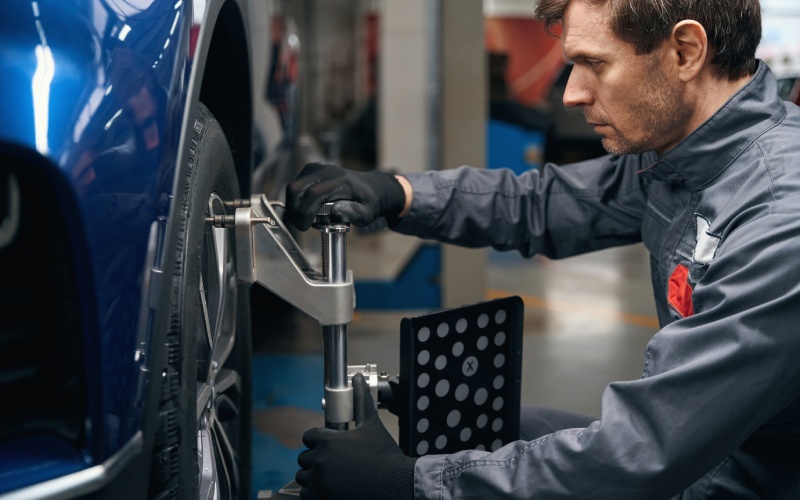
Modern alignments are performed on a level rack with targets and cameras that measure each wheel’s relationship to the vehicle centerline. Technicians compare readings to manufacturer specifications and make adjustments so the car drives straight with minimal tire scrub. The main angles tell the story of how your vehicle will feel on Menomonee Falls roads:
- Toe: The inward or outward pointing of the tires. Excess toe scrub,s tread, and drags the car off-center.
- Camber: The inward/outward tilt at the top of the wheel. Too much negative camber wears inner edges and can increase tramlining.
- Caster: The steering axis tilt. A proper caster helps straight-line stability and steering wheel return to center.
- Thrust angle: The direction the rear wheels point relative to the vehicle centerline. Off thrust causes the steering wheel to sit crooked.
During service, a technician also inspects tie-rod ends, ball joints, control arm bushings, struts, and shocks. Worn parts cannot hold alignment, so fixing looseness comes first. Many vehicles also benefit from a steering angle sensor reset after adjustments, ensuring driver-assist features interpret “straight ahead” correctly. If you upgraded to larger-diameter wheels, alignment is especially important to protect new tires.
Quick at-home checks before you schedule
You can spot early signs of trouble in your driveway or on a familiar stretch of smooth road. These simple checks help decide when to book an alignment without any tools:
- Steering wheel test: On a flat, straight road at cruising speed, confirm the wheel sits level while driving straight.
- Pull check: Lightly loosen your grip and see if the vehicle drifts left or right without wind or road crown.
- Tread inspection: Feel for feathering or cupping across the tread and compare inner/outer edge wear.
- Tire pressure baseline: Verify all four tires are at the door-jamb recommendation before judging pull.
- Post-impact note: After a pothole or curb hit, watch for a new vibration or off-center wheel.
Alignment often pairs well with other services. If you are rotating tires, installing new rubber, or replacing struts and control arms, aligning everything once reassembled locks in the benefits. It is also wise to follow collision repairs, even minor ones, because subframe shifts can move angles at the rear. And if you frequently commute between Menomonee Falls and areas near Slinger, WI, where speeds are higher and crosswinds stronger, a centered wheel and neutral tracking make long drives less tiring.
Frequently Asked Questions:
How often should I get an alignment?
As a rule of thumb, check alignment yearly or every 12,000–15,000 miles, and any time you install new tires, notice uneven wear, or hit a pothole or curb hard enough to remember.
Will a proper alignment fix my steering wheel shake?
A shake is usually a balance or a bent wheel/rotor issue. Alignment corrects tracking and tire scrub, while wheel balance addresses vibration. We inspect both to resolve the true cause.
Do I need an alignment after replacing struts or control arms?
Yes. New suspension parts change geometry and ride height; aligning afterward ensures the new components deliver even tire wear and straight-line stability.
Can low tire pressure make the car pull?
Absolutely. One underinflated tire can mimic misalignment. Always set pressures to the door-jamb spec before evaluating pull or booking an alignment.
What is the difference between front-end and 4-wheel alignment?
Most modern vehicles require 4-wheel alignment because rear angles affect the car’s thrust line and steering wheel position. Front-only adjustments can leave the wheel off-center if the rear is out of spec.
Will alignment improve fuel economy?
Yes. Reducing toe-related scrub lowers rolling resistance, which can improve fuel efficiency and reduce heat and noise from the tires.
Driving should feel natural—no constant corrections, no wandering, and even wear across every tread block. If your steering wheel sits crooked on Main St or tires are wearing unevenly, book a professional 4-wheel alignment. Our skilled technicians measure, adjust, and verify to manufacturer specifications so your vehicle tracks straight and your tires last longer. Schedule online or call for an appointment that fits your day; we will handle the inspection, make needed suspension recommendations, and dial in the specs so your next drive through Menomonee Falls feels calm, centered, and secure with help from Russ Darrow Toyota.
0 comment(s) so far on 4-Wheel Alignment and Suspension Health for Menomonee Falls, WI Drivers